5 Reasons Malaysian Retailers Pick Wood for Fixtures
Wood is the top choice for retail displays because it combines enough structural strength for everyday merchandise, low tooling cost for small custom runs, and a warmer, premium look that metal or acrylic fixtures can't match. For Malaysian retailers renovating a boutique, pharmacy, or specialty store, timber fixtures also blend more easily into varied storefront designs than standardised steel racking.
What Is a Wood Retail Display?
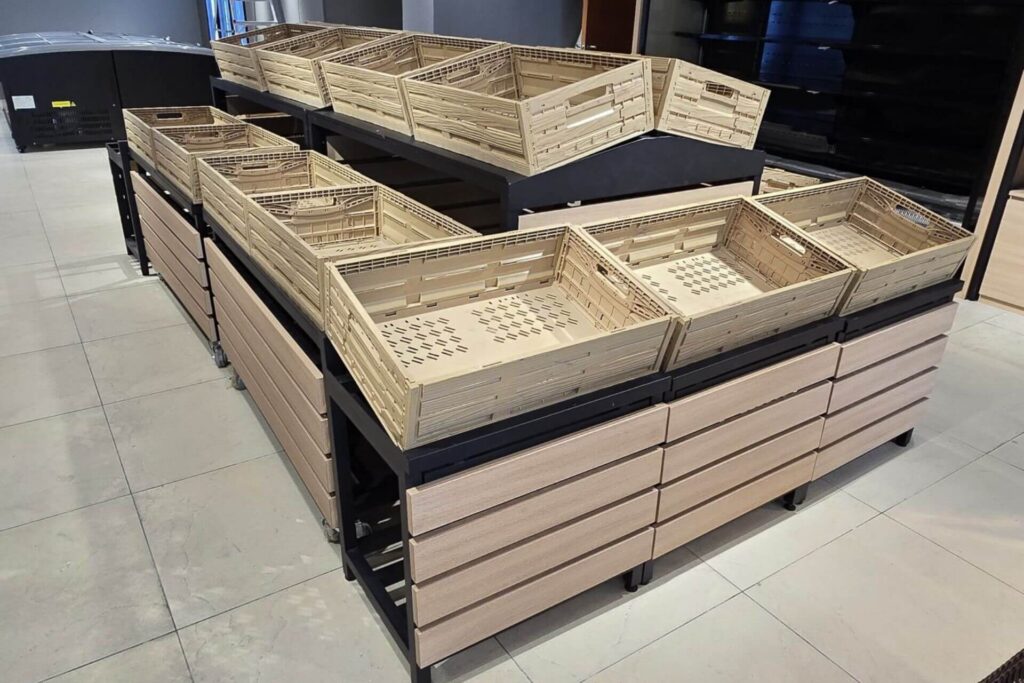
A wood retail display is a shop fixture built from solid timber, plywood, or MDF — such as shelving units, cash wrap counters, product tables, or feature bays — used to present merchandise. Most commercial units use 18mm plywood or MDF carcasses with a timber veneer, laminate, or painted finish rather than solid hardwood throughout, which keeps weight and cost manageable while still giving the appearance of solid wood. Wood displays are common in boutiques, pharmacies, cosmetics counters, and F&B retail, and are often paired with steel gondola racking for the main aisle runs.
Wood vs Metal vs Acrylic Retail Fixtures
| Factor | Wood | Metal (steel gondola) | Acrylic |
|---|---|---|---|
| Brand feel | Warm, premium, boutique | Neutral, industrial, high-volume | Modern, minimal, high-value items |
| Typical load per shelf | Moderate — suited to apparel, cosmetics, books, gifts | Higher — built for bulk grocery and FMCG loads | Lowest — light, small-format items only |
| Custom small-batch cost | Lower — CNC-cut panels, flat-pack assembly | Higher — tooling and welding for short runs | Moderate — depends on fabrication complexity |
| Repair approach | Sand, refinish, or panel-swap | Repaint or replace damaged section | Full panel replacement — cracks don't repair |
| Best fit | Boutique, pharmacy, cosmetics, F&B retail | Minimart, supermarket, convenience store aisles | Jewellery, electronics, premium small goods |
1. Wood Creates a Warmer, More Premium In-Store Feel
Wood grain and natural tone read as warmer and more premium to shoppers than powder-coated steel or acrylic, which is why fashion boutiques, pharmacies, and specialty gift stores lean on timber fixtures rather than standard gondola racking for their front-of-store displays. Because every panel's grain is slightly different, no two wood fixtures look identical, which helps a store avoid the generic, big-box look that comes from off-the-shelf steel shelving. Retailers building a distinct storefront — rather than a pure-volume aisle layout — typically specify wood for entry displays, cash wrap counters, and feature tables, then switch to steel gondola racking for the bulk-stock aisles behind it.
2. Wood Handles Everyday Retail Loads Without Full Steel Specification
Retail wood fixtures built from 18mm plywood or MDF with proper internal bracing comfortably hold everyday retail merchandise — apparel, cosmetics, books, snacks, gift items — without needing the load rating of a commercial steel gondola bay. Steel gondola shelving is still the right choice for bulk, heavy, or dense FMCG stock, where 80–150 kg per shelf level is the working range. Wood fixtures are not built to compete with that spec, and shouldn't be used for it — they're built for lighter, higher-margin merchandise where presentation matters more than raw carrying capacity, at a lower fixture cost per bay.
3. Wood Costs Less for Small, Custom-Fitted Runs
Wood fixtures are typically CNC-cut from flat panels and assembled with cam-lock fasteners or screw inserts, which keeps tooling and setup costs low even for a single custom store fit-out. Steel fixtures need welding jigs and tooling that only pay off at higher production volumes, so a one-off custom counter or feature bay in steel usually costs more per unit than the equivalent piece in engineered wood. For a retailer renovating one or two outlets rather than rolling out a 50-store chain, that makes wood the more cost-efficient material for anything outside the standard gondola aisle.
4. Wood Fixtures Are Easier to Repair and Refinish
A dented or scratched wood panel can usually be sanded, patched, and refinished on site, extending the fixture's usable life without a full replacement. Damaged steel fixtures generally need repainting or swapping the whole panel, and cracked acrylic can't be repaired at all. For a store that repositions displays seasonally or takes daily wear at customer-facing counters, that repairability lowers the total cost of keeping fixtures looking presentable over several years.
5. Wood Takes Branding and Finishes That Metal and Acrylic Can't
Wood accepts paint, stain, laminate, veneer, and CNC-engraved branding directly onto the fixture itself, which lets a retailer match store colours, add a logo cut into a counter face, or run a consistent finish across cabinetry, shelving, and the cashier counter in one material. Multi-format retailers — a group running a pharmacy, a hardware store, and a boutique under one brand — often standardise on in-house timber joinery for this reason, since the same workshop can produce very different finishes from the same base material and machinery.
Which Should You Choose? By Store Type
Boutique, Fashion, or Gift Store
Wood-dominant. Use timber shelving, tables, and a wood-clad cashier counter throughout; steel is rarely needed unless stockroom shelving is involved.
Pharmacy, Cosmetics, or Specialty Retail
Mixed. Wood for the front counter, feature bays, and branded display units; steel gondola racking for the main product aisles where SKU count and stock density are higher.
Minimart, Convenience Store, or Supermarket
Steel-first. Gondola racking carries the bulk of the floor plan for load and turnover; wood is reserved for the cashier counter and any premium or promotional end-cap displays.
Hardware, Petrol Retail, or High-Moisture Areas
Steel or laminate-clad wood. Untreated timber performs poorly against constant humidity, spills, or heavy point loads — specify a moisture-resistant laminate finish over the substrate, or steel, for these zones.
Frequently Asked Questions
Is wood as durable as metal for retail shelving?
For everyday retail merchandise — apparel, cosmetics, books, gift items — properly built wood fixtures hold up well for years. For bulk, heavy, or dense stock, steel gondola shelving remains the more durable and higher-capacity option.
Does wood need special treatment in Malaysia's climate?
Yes. Malaysia's humidity makes moisture resistance and pest treatment important — specify sealed or laminated panel finishes rather than untreated raw timber, and avoid solid wood in high-moisture zones such as wet markets or outdoor-facing displays.
Can wood displays be combined with gondola racking?
Yes, and this is the most common setup in Malaysian retail — wood for cashier counters, entry displays, and feature bays, with steel gondola racking used for the main aisle shelving where load and SKU density are higher.
What material is actually used — solid wood or something else?
Most commercial retail fixtures use 18mm plywood or MDF carcasses finished with veneer, laminate, or paint rather than solid hardwood throughout. This keeps cost and weight down while still giving a timber look and finish.
How much does a custom wood display cost in Malaysia?
Cost depends on size, finish, and whether it's a standard module or a fully bespoke design — as a rule, small custom runs in wood cost less than the equivalent in welded steel because of lower tooling requirements. Contact Uniwell Retail Solution for a quote based on your store's layout and finish.
Bottom Line
Wood is the right material for retail displays where brand feel, custom finishes, and small-batch cost matter more than raw load capacity — boutiques, pharmacies, cosmetics counters, and feature displays are the clearest fit. For bulk-stock aisles and heavy FMCG loads, steel gondola racking is still the better-specified choice, and most Malaysian stores end up using both. Uniwell Retail Solution Sdn Bhd designs and fabricates both in-house — timber cabinetry and counters through its bespoke cabinetry and retail solutions teams, and steel gondola racking through the same workshop — so a store can mix materials on one project without coordinating separate suppliers. See examples in Uniwell's project portfolio, or request a quote for your store fit-out.